V
Why we sabotage ourselves
Self-sabotage, procrastination, fear of success: the hidden logic
By Vincent Snickers · 6 min read
You put things off until tomorrow, you shy away from the goal, and you conclude that you lack willpower. More often than not, willpower is not the issue. We hold back to spare ourselves an emotion, to protect an image of ourselves, or out of loyalty to our own people. And willpower has little hold over what it does not know.
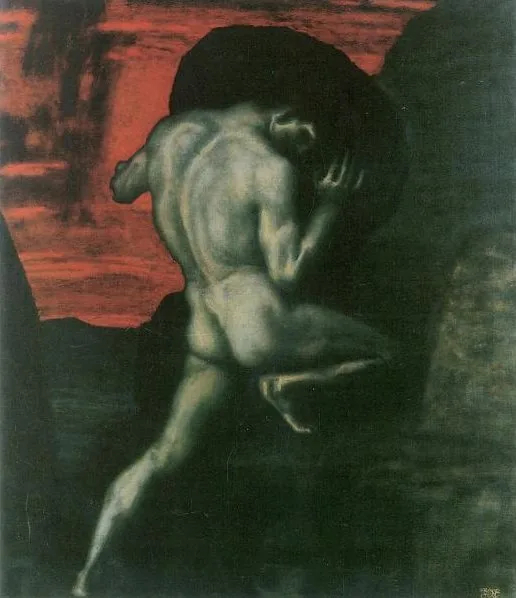
Everything is ready, and you do not send it
The file is finished; all that remains is to send it. You tidy your desk, you answer messages of no importance, and the deadline passes. Or you arrive late for the interview you had been waiting for for months.
The available estimates, still tentative, put the proportion of adults who procrastinate chronically at between 15 and 20%. Among students, Piers Steel’s review reports that 80 to 95% procrastinate at least from time to time, and nearly half do so regularly and to their detriment.
We usually believe it is a matter of laziness, poor organisation, a lack of discipline. We buy ourselves methods, we set ourselves deadlines, and we treat ourselves harshly.
Holding back does not happen at random
The same people work hard everywhere else. A lazy person would be lazy about everything.
We hold back at precise moments. Just before the test, just after a first success, at the moment of obtaining. One entrepreneur was not moving forward even though everything was in place. He eventually admitted that he was terrified of succeeding. Another, after a first career had been broken, had told himself: I am a failure. Years later, at the moment of finally obtaining what he had been aiming for, he made three serious mistakes in quick succession, watching himself make them.
Methods often fail. Fuschia Sirois and Timothy Pychyl propose understanding procrastination as short-term mood regulation. We are not fleeing the task, we are fleeing what it makes us feel. A diary alone does little to change that.
Holding back protects something
Identity comes from idem, the same. If I identify with a fact, I am saying that I am identical to that fact. That fact then possesses what I am, since I reduce myself to it. Our identity possesses us.
People always tell themselves the same sentences. I am stupid. I am useless. I am not enough. It is this sentence that decides what is possible or impossible, and so the course of a life.
Leon Festinger gave the name dissonance to the discomfort of holding together two ideas that contradict each other. Succeeding when you believe yourself incapable is one instance of it. In 1962, Elliot Aronson and Merrill Carlsmith observed that people convinced they were bad at a task, when they suddenly succeeded at it, changed their answers until they did less well. The result has been debated since, but it gives an idea of the mechanism.
The word “sabotage” in fact covers five mechanisms, which do not call for the same response.
Fleeing an emotion. The fear of doing badly, shame, doubt. This is procrastination in Sirois and Pychyl’s sense.
Manufacturing an excuse. In 1978 Steven Berglas and Edward Jones described self-handicapping. Before a test, we create an obstacle for ourselves. If we fail, the obstacle is to blame, and the idea we have of our abilities is saved.
Staying true to one’s image. According to William Swann, we seek out the feedback that confirms what we think of ourselves, even when it is unfavourable. Someone who judges himself worthless finds criticism more credible than praise, even if the praise pleases him in the moment.
These last two run in opposite directions. Self-handicapping protects a good image one doubts. Consistency protects a bad image one is sure of. The first says “I could, if”. The second says “I knew it wasn’t to be”.
Being wrecked by success. In 1916 Freud described people who collapse at the very moment when a long-pursued wish comes true. For them, succeeding amounts to taking a forbidden place, and they punish themselves for it.
Not betraying one’s own. The sociologist Vincent de Gaulejac described those who rise above the milieu they come from. The price is no longer guilt. It is a two-sided shame: shame of one’s origins before the new milieu, shame of one’s success before one’s own people.
The right question is “at what moment?”
We can stop calling ourselves lazy, which only confirmed the sentence. And we replace “why do I sabotage myself”, which remains unanswered, with “at what exact moment do I hold back”. That moment points to the mechanism at work.
When the delaying has affected every area of life since childhood, with an attention that keeps drifting, or when it sets in alongside lasting sadness and fatigue, the question calls for a medical assessment.
| The moment of holding back | Likely mechanism | What it protects | Where to begin |
|---|---|---|---|
| At the start, facing the task | Fleeing an emotion | Immediate discomfort | Name the emotion, then ten minutes of work |
| Just before the test | Self-handicapping | A good image one doubts | Agree to be judged on a real attempt |
| When success becomes possible | Consistency with one’s self-image | A bad image one is sure of | Trace where the “I am” sentence comes from |
| At the moment of obtaining | Guilt at succeeding | An innocence | Ask whose place one would be taking |
| At the moment of surpassing one’s own | Loyalty | The bond | Name whom one fears leaving behind |
Holding back = what reaching it threatens − what the goal promises. What is threatened may be a mood, a self-image or a bond.
Go back over three occasions when you held back. For each one, note the exact moment you held back and refer to the table.
Then complete the sentence “I am…” with what you tell yourself in difficult moments. Where does it come from, who said it first, what does it make impossible? A negative identity sometimes rests on precise memories, a sentence, a look, and sometimes on a climate with no identifiable scene. Finding where the sentence comes from helps you recognise it for what it is, a sentence you were given. If this looking back stirs up memories of violence or leaves you overwhelmed, do not pursue it alone.
- Sigmund Freud, “Those Wrecked by Success”, in “Some Character-Types Met with in Psycho-Analytic Work”, 1916.
- Leon Festinger, A Theory of Cognitive Dissonance, 1957.
- Elliot Aronson and J. Merrill Carlsmith, “Performance expectancy as a determinant of actual performance”, Journal of Abnormal and Social Psychology, 1962.
- Steven Berglas and Edward E. Jones, “Drug choice as a self-handicapping strategy in response to noncontingent success”, Journal of Personality and Social Psychology, 1978.
- William B. Swann, “Self-verification: Bringing social reality into harmony with the self”, 1983.
- Vincent de Gaulejac, La Névrose de classe, 1987.
- Piers Steel, “The nature of procrastination”, Psychological Bulletin, 2007.
- Fuschia Sirois and Timothy Pychyl, “Procrastination and the priority of short-term mood regulation: consequences for future self”, Social and Personality Psychology Compass, 2013.
If this text speaks to you, a first twenty-minute conversation is a chance to talk about it. Book a first conversation