Approach Values Pricing FAQ Contact Conferences Français Book a session

Talks & training for teams that see clearly, hold steady and stay engaged.

Vincent Snickers · Psychotherapist, Jungian approach · Paris · Brussels · Geneva · International

What holds an organisation back is never only its processes. It is also the psychological mechanisms nobody sees — the ones quietly shaping decisions, relationships, creativity and commitment.

Drawing on Carl Gustav Jung's analytical psychology and contemporary behavioural science, my work helps your teams name their blind spots, move past what has them stuck, and recover a clearer, steadier, more effective capacity to act.

Discuss your project

Free 20-minute exploratory call · Reply within one working day · Delivered in English and French
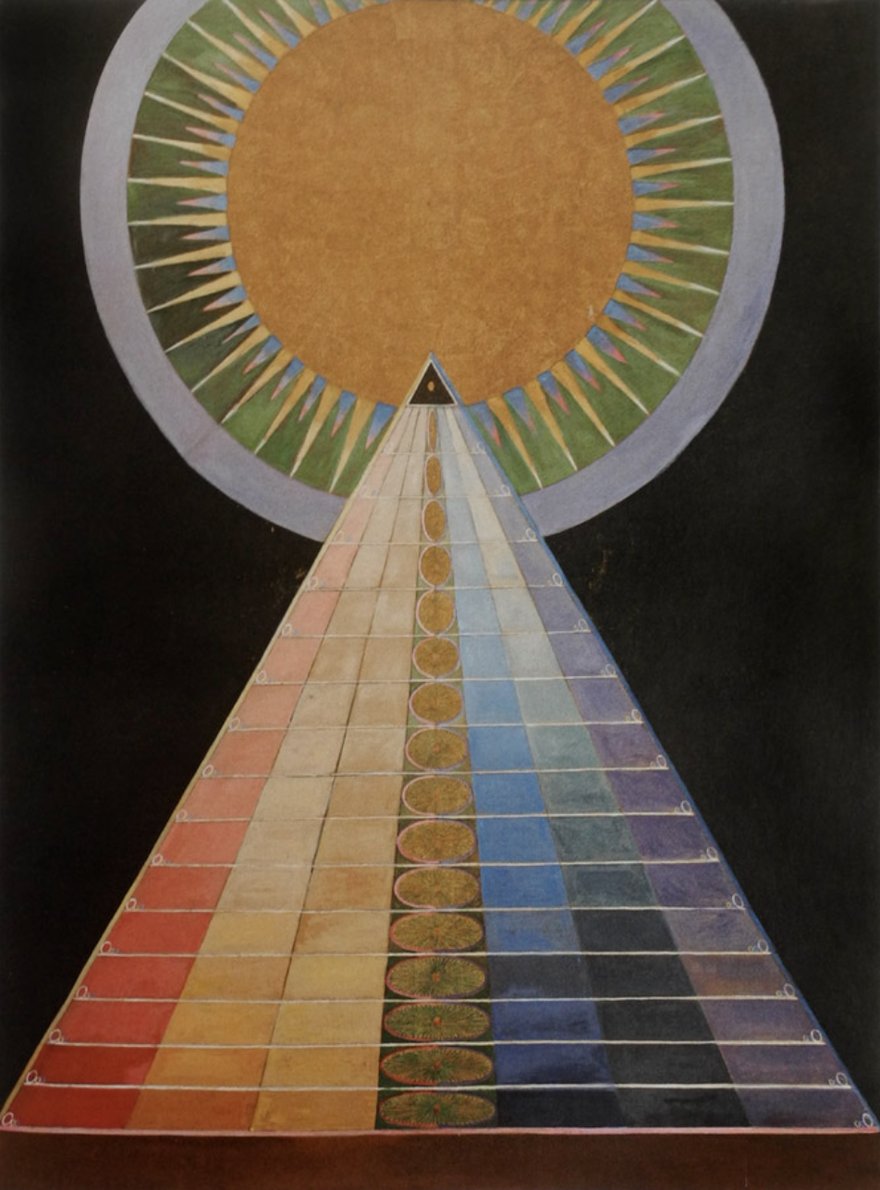
Hilma af Klint, Altarpiece No. 1, 1915
Rising, one degree at a time, towards greater awareness.
Hilma af Klint, Altarpiece No. 1, 1915
I.The premise

What holds a team back is rarely what you think.

Organisations are never limited by their resources alone. They are also limited by the level of self-awareness of the people inside them. Behind persistent conflict, flagging commitment, poor cooperation, resistance to change or professional burnout, there is usually a psychological mechanism at work that nobody has named. Bringing it into the open changes how a team thinks, talks and acts.

Leaders are trained to run systems, rarely to read human dynamics. Yet an organisation's real ceiling is seldom a ceiling of competence — it is a ceiling of awareness.

My work is to make these mechanisms visible, intelligible and usable, without therapeutic jargon and without a coat of wellness varnish. A rigorous framework, drawn from analytical psychology and tested every week in clinical practice, translated into tools your teams can use the same afternoon.

The four keys I teach:

II.The outcomes

What your teams actually walk away with

Participants leave with clear bearings and tools they can apply straight away.

The cause, not the symptom

Conventional coaching corrects visible behaviour. This approach addresses what produces it. The change holds because nothing is being forced.

From practice, not from theory

What I teach, I observe every week in consultation with executives and managers. No model is presented before it has been tested.

Genuinely tailored

Nothing comes off the shelf. A session on conflict is not written the same way for an executive committee and for a school.

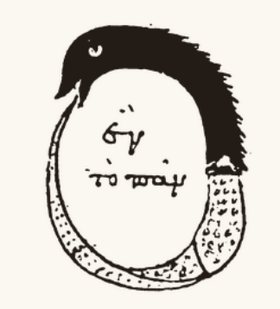
Ouroboros, Byzantine alchemical manuscript
“When an inner situation is not made conscious, it appears outside as fate.”
C. G. Jung · Aion, 1951
III.The formats

Three formats, depending on how deep you want to go

Leave a mark

The Keynote

Format45 to 90 minutes · 20 to 500 people

“The invisible forces that govern organisations”

One subject, one argument, one picture. Examples drawn from your sector, then an open exchange where the real questions finally surface. Ideal for a company conference, an offsite or a dedicated day.

Plan a keynote
Build a practice

The Workshop

FormatHalf a day to two days · 6 to 15 people

“Understanding depth psychology to work better together”

Small-group work on your real situations. Everyone leaves with a framework and a practice they have already tried in the room — not with a page of notes.

Build a workshop
Shift the culture

The Masterclass & Series

FormatSessions spread over several months

“Jung applied to contemporary leadership”

The only format that genuinely moves a culture, because it gives ideas the time to become reflexes. Talks, workshops and executive-committee supervision.

Design a series

On site across France, Belgium, Switzerland and internationally, or remotely. English and French. A tailored quote follows the exploratory call, sent within five working days.

IV.The programmes

Five programmes for five real problems

Each programme starts from a difficulty you already recognise, then gets rewritten around your context: your sector, your culture, your actual cases.

01 · Leadership
The problemA leader exhausted by the need to control, a team growing tense
ForExecutive leadership, boards, senior managers

The leader and their blind spots

A leader passes down to the entire management line whatever they do not know about themselves. Naming those automatic patterns, those sore points, and the gap between the role and the person is what unlocks a calm authority — one that no longer has to push to be followed.

02 · Team cohesion
The problemProfiles that misread each other, friction that settles in
ForCross-functional teams, merging departments

Working with people who don't think like you

Jung originated the psychological types that most team assessments are descended from. Going back to the source shows how each person perceives, decides and recovers — and turns apparent incompatibilities into working complementarities.

03 · Burnout prevention
The problemSick leave, quiet disengagement, managers running on empty
ForHR leadership, managers, high-pressure roles

Spotting the wear before the breakdown

Burnout is not simply too much work: it is a prolonged conflict between what we demand of ourselves and what reality allows. That reading changes prevention entirely — recognising the early signals, understanding overcompensation, and restoring limits people can actually hold.

04 · Leading change
The problemA transformation that has stalled, resistance that never says its name
ForOrganisations restructuring or scaling fast

Leading change without breaking the team

Every transformation wakes old fears. Force them down and they harden into passive resistance — the most expensive kind there is. Naming them, understanding what they protect and giving them somewhere to go is what lets you see the change through.

05 · Communication & conflict
The problemMeetings that derail, disagreements that have turned personal
ForExecutive committees and operational teams

Reading what a conflict is really about

A meeting that catches fire, or a strategic disagreement that turns into a standoff, almost always means a sore point has been touched. Learning to spot it — in yourself and in the other person — lets you get back to the substance before the relationship takes the damage.

Keynotes for your events

  • Does work still mean anything?What sustains commitment when uncertainty becomes the norm.
  • The trap of the roleWhat over-adapting to company culture costs senior staff, and what to do about it.
  • How trust is builtThe mechanisms that create it, the ones that destroy it, the ones that repair it.
  • Failure, and what comes afterWhat a professional rupture takes apart, and what it makes possible.

Also available: deciding under uncertainty · ethics and values at work · being human in the age of artificial intelligence.

V.The speaker

Vincent Snickers

Hilma af Klint, The Tree of Knowledge No. 2, 1913-1915
Hilma af Klint, The Tree of Knowledge, No. 2, 1913–1915

For several years I have worked with executives, founders and private clients to identify the psychological mechanisms that limit their freedom to act.

My approach rests primarily on Carl Gustav Jung's analytical psychology, informed by neuroscience, cognitive psychology and philosophy.

My aim is a simple one: to make visible what usually operates in the dark, so that decisions can be freer, relationships healthier, and cooperation built to last.

See my public psychology lessons

VI.How it works

How we'll work together

i.

An exploratory call · 20 min, free

Understanding your context, your audience, and what concretely needs to change.

ii.

A written proposal · within five days

Objectives, structure, format, quote and terms. No commitment on your side.

iii.

Bespoke design

The session is written for you, with your cases and your vocabulary. One review point before the day itself.

iv.

Delivery

On site or remotely, in English or in French.

v.

Follow-up

Materials shared with participants, a debrief with you, and options to go further if the need is there.

Confidentiality

Anything shared in preparation is covered by the professional confidentiality that governs my clinical practice.

Ethical boundaries

No therapy in the room, and no participant put on the spot. The setting stays firmly educational.

VII.Frequently asked questions

Before we work together

Conventional training works on visible behaviour: what to say, how to hold yourself, which method to apply. This approach looks at what produces the behaviour in the first place. Once the cause is understood, the adjustment happens naturally and lasts, without a permanent effort of will.

No, and the boundary is stated explicitly. This is educational work applied to professional situations. The consulting room is where therapy happens; the training room is where understanding and practice happen. No participant is put on the spot or asked to disclose anything personal.

The theoretical foundation is stable; the session is rewritten for you — your cases, your vocabulary, your constraints. That is precisely why every engagement begins with a conversation and never with a catalogue.

The quote depends on the format, the duration, the preparation involved and any travel. It is drawn up after the exploratory call and commits you to nothing.

Yes. The quote, the engagement agreement and the invoicing are all issued in your organisation's name, following your internal procedures.

Yes. Both talks and workshops have a remote format rebuilt for the screen, with shorter segments and more interaction.

Four to six weeks for a talk, six to eight for a bespoke workshop or series. If the situation is urgent, ask anyway — the answer is sometimes yes.

VIII.Contact

What if your next lever for performance is one you can't see?

Every organisation holds untapped potential. Let's identify what is holding your people back today, and design a session that fits what you are actually facing.

Free 20-minute exploratory call · Personal reply within one working day · +33 7 68 00 10 46

Hilma af Klint, The Swan No. 17, 1915
Hilma af Klint, The Swan, No. 17, 1915